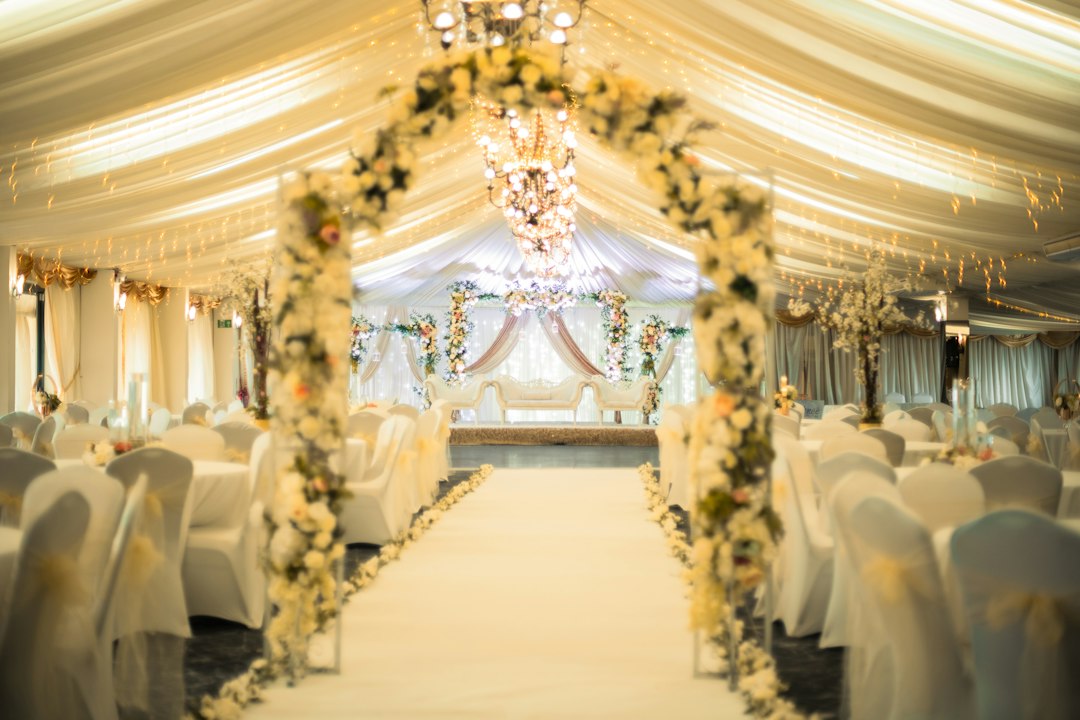
Dev Uthani Ekadashi falls on 20th November 2026, and the moment it passes, something shifts across North India: the four-month pause of Chaturmas lifts, and the wedding season officially reopens. From that date through the first half of December, before Kharmas brings another short pause until Makar Sankranti in January, the calendar fills with some of the year’s busiest vivah muhurats — and with them, the single biggest stretch of saree shopping most Banarasi weavers see outside Diwali. If you are building a wardrobe for a December wedding, whether you are the bride, a close family member, or a guest attending several functions in a single week, one fabric earns its place at the centre of that wardrobe more than any other: Banarasi Katan silk.
Photo by Simply thrilled on Unsplash
Why December Marks the Real Start of Wedding Season
Most families know wedding season as a loose, months-long window, but 2026 has a sharper shape to it. Chaturmas — the four holy months when Lord Vishnu is believed to be in cosmic sleep — ends with Dev Uthani Ekadashi on 20th November, followed soon after by Tulsi Vivah, the symbolic wedding of the Tulsi plant. Only once this happens do priests consider new vivah muhurats auspicious again. That makes late November through the first two weeks of December the single busiest, most concentrated run of weddings before Kharmas (Dhanurmas) closes the window until Makar Sankranti on 15th January 2027. If a wedding invitation is sitting in your calendar for this period, you are shopping in exactly the window Varanasi’s weavers plan their looms around every year.
Why Katan Silk Is December's Signature Wedding Fabric
Katan silk is the fabric most people picture the moment someone says “Banarasi saree.” Woven entirely from pure, twisted mulberry silk in both warp and weft, it has a density and structure that lighter weaves simply cannot match — a stiff, regal drape that holds its pleats and pallu through a long ceremony without constant adjusting. That weight, which can feel like too much for an October function, is exactly right for December: North Indian winter evenings run cool, mandaps are often outdoors or semi-open, and a heavier silk keeps you comfortably warm while still looking unmistakably bridal. Our Katan Silk collection carries our weavers’ most intricate booti and jaal work, the kind of detailing that is made to be photographed under string lights and winter sun alike.
Matching Your Saree to Each December Wedding Function
A December wedding rarely means one event. Most families move through four or five functions across a single week, and a well-planned wardrobe treats each one differently rather than repeating a single saree:
- Mehendi and Haldi: Daytime functions call for something lighter. A Chiffon Banarasi saree in turmeric yellow or marigold moves easily and still carries the signature zari border.
- Sangeet night: You will be on your feet and dancing, so Chiffon again earns its place here — it flows rather than restricts, and photographs beautifully under stage lighting.
- The wedding ceremony: This is Katan silk’s moment. Its heft and dense zari work are built for the hours spent seated at the mandap through the pheras, and for the family photographs that follow.
- Reception: A Soft Silk Banarasi saree gives you shimmer and festive richness without the full ceremonial weight of Katan, which matters after a long week of functions.
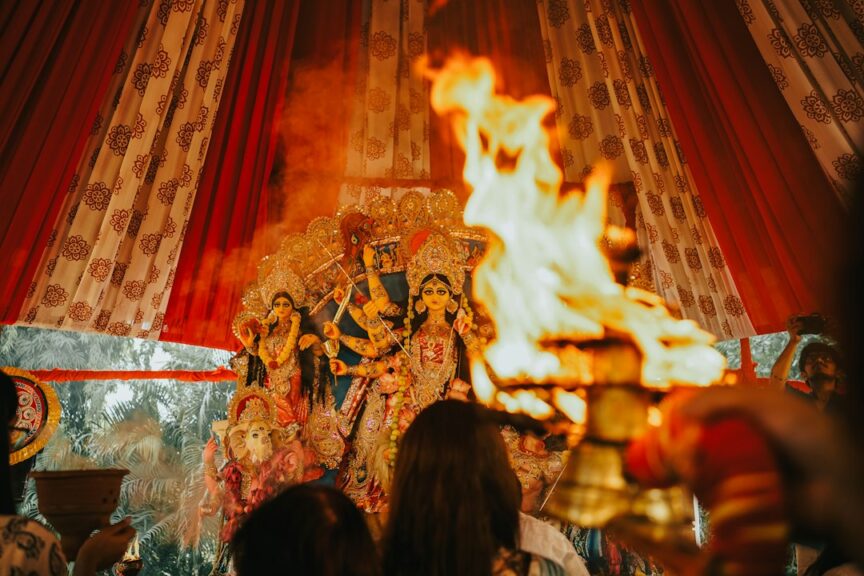
Photo by Kanishk Agarwal on Unsplash
Styling Katan Silk for a Winter Wedding Season
December weddings bring their own styling considerations, mostly around the cooler weather and the sheer number of hours you will spend in one outfit:
- Layering: A pashmina or silk shawl draped over one shoulder keeps you warm through an outdoor mandap ceremony or a late reception without hiding the saree’s border.
- Blouse: Full-sleeve or elbow-length blouses in velvet or silk, in a contrasting jewel tone, suit the season far better than sleeveless cuts and photograph beautifully against Katan’s zari.
- Jewellery: Temple jewellery, kundan sets, or antique gold complement Katan’s density better than delicate minimalist pieces — let the weave and the jewellery carry equal weight.
- Draping: The classic Nivi drape, pleated and pinned at the shoulder, keeps the pallu secure through a long ceremony and an evening of greeting guests.
- Footwear: Closed or block-heeled juttis handle outdoor venues and cold stone floors far more comfortably than strappy heels.
How to Spot an Authentic Handwoven Katan Silk Saree
December’s wedding rush is exactly when power-loom imitations flood the market under the “Banarasi” name, so it is worth knowing what you are examining before you buy. Genuine Katan silk has a firm, slightly stiff hand-feel, because it is pure silk through and through rather than a silk-blend. Turn the pallu over: a handwoven piece shows small floating threads on the reverse where the motif changes, evidence of the extra weft a power loom cannot replicate. The zari itself should have a warm, slightly uneven glow rather than a flat, uniform shine, and the border motifs should feel woven into the fabric, not printed on top. A brand that sources directly from Varanasi’s weaver families is your simplest guarantee of authenticity.
Caring for Your Banarasi Katan Silk Saree After the Season
A genuine Katan silk saree is a decades-long investment, not a single-wedding purchase, so it rewards a little care once the celebrations end:
- Dry clean only — water and regular detergent can dull or tarnish real zari thread over time.
- Store wrapped in soft muslin or cotton, never plastic, which traps moisture and yellows silk over months of storage.
- Refold along different lines every few months if the saree sits in long-term storage, so the zari does not crease and crack along one permanent fold.
- Iron on the reverse, on a low silk setting, with a thin cotton cloth between the iron and any zari border.
- Keep perfume and hairspray off the fabric itself — apply these before draping rather than after.
Frequently Asked Questions
Is Katan silk too heavy to wear at an outdoor December wedding?
Not at all — its weight is exactly what makes it comfortable in cooler weather, and a shawl over the shoulder handles any late-evening chill.
What should I wear if I’m attending several functions for the same December wedding?
Plan by function rather than repeating one saree: Chiffon for daytime mehendi and sangeet, Katan Silk for the ceremony itself, and Soft Silk for the reception.
How long does it take to receive a handwoven Katan silk saree before a wedding date?
Because each piece is handwoven, order with a reasonable buffer before your function rather than waiting until the final week of the muhurat window.
Shop December Wedding-Ready Banarasi Sarees at Kashi Sarees
Every saree we sell is handwoven by weaver families in Varanasi, carrying forward generations of craft rather than mass production. Whether you need the ceremonial richness of Katan Silk for the big day itself, the easy movement of Chiffon for mehendi and sangeet, or the lighter shimmer of Soft Silk for the reception, explore our full shop and find the handwoven piece that will carry you through this December’s wedding season — and the many after it.